
 Peanut Gallery: Ethiopia has considered itself a Christian country since the fourth century, and its Christian roots are sometimes traced back to the Ethiopian eunuch who met Philip on the road while reading the book of Isaiah (Acts 8:26-40). Today it is the only Christian-majority country in the Horn of Africa, surrounded by a “sea” of Islam. (Barnabas Fund)
The source of persecution is twofold: the Ethiopian Orthodox Church (hostility towards the growing Protestant Christian minority) and Islamic extremistism (hostility towards all Christians).
________________________________________
 Population: 86.5 million (57 million Christians)
Main Religion: Christianity (Orthodox) – see Christianity in Ethiopia (Wikipedia)
Source of Persecution: Ecclesiastical arrogance (or Denominational elitism) and Islamic extremism
_________________
For years, the Ethiopian Orthodox Church has persecuted believers who have left their ranks or joined renewal movements. But Islamic extremism has now become the dominant source of persecution. Converts and ‘underground believers’ have to be very cautious to avoid being traced. Muslim fanatic group, Kewarjah, is repeatedly blamed for attacks against Christians in the south-west. A new law banning all religious messages and talks from public spaces is expected to bring a wave of restrictions against Christians.

PLEASE PRAY:
- For secret believers; there have been some violent attacks within families.
- Violence against Christian women often goes unreported. Pray for protection for Christian women.
- Thank God that Open Doors has been able to supply Bibles and training, as well as bicycles to pastors.
PERSECUTION DYNAMICS
Ethiopia rose sharply on the World Watch List in 2012. Protestant churches are the fastest growing movement in the country. “Underground movements” both in EOC and Muslim-majority areas have been reported as making incredible progress in their work, and EOC and Islamism will continue to see them as a threat. In the short term it is likely that persecution of Christians will increase sharply – all the more so because extremist Islam in Ethiopia is fuelled by external sources. The unresolved conflict in the east of the country is also attracting some extremist groups like al-Shaabab from neighbouring Somalia.
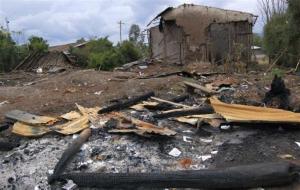
Hostilities take different forms. There are the ‘normal’ hostilities represented by significant pressure in private and church life. Converts and almost all ‘underground believers’ have to take maximum care to avoid being traced. The level of violence is medium, although it is likely that several forms of physical violence are underreported, in particular, violence against Christian women. A church leader was stabbed to death by Muslims six hours’ walk from his home village in Western Ethiopia. Muslims singled out the leader because of his active role in evangelism and discipleship services in a newly started church.





 The Peanut Gallery