Please pray for Christians in Oman – World Watch List #22

OMAN (Wikipedia) – World Watch List #22 (Open Doors UK)

oman MAPPopulation: 2.9 million (35,000 Christians)
Main Religion: Islam
Government: Absolute Monarchy
Source of PersecutionIslamic extremism/dictatorial paranoia

The legal system names all citizens as Muslim and all legislation is based on Islamic law. Apostasy is not a criminal offence, but Omani converts face legal discrimination and could lose their family, job, or even their life if their faith is discovered. Almost the entire Christian population is expatriate; there are few indigenous Christians. All religious organisations must register and Christian meetings are monitored. Several foreign workers were deported in 2011 because of their Christian activities.

PLEASE PRAY:

  • That the few indigenous believers will find ways to meet for fellowship
  • Open evangelism is prohibited by law. Pray for wisdom for Christians sharing the gospel
  • Permission is needed from the authorities for the distribution of religious literature. Pray that God’s Word will spread through Christian TV and internet sites.

PERSECUTION DYNAMICS

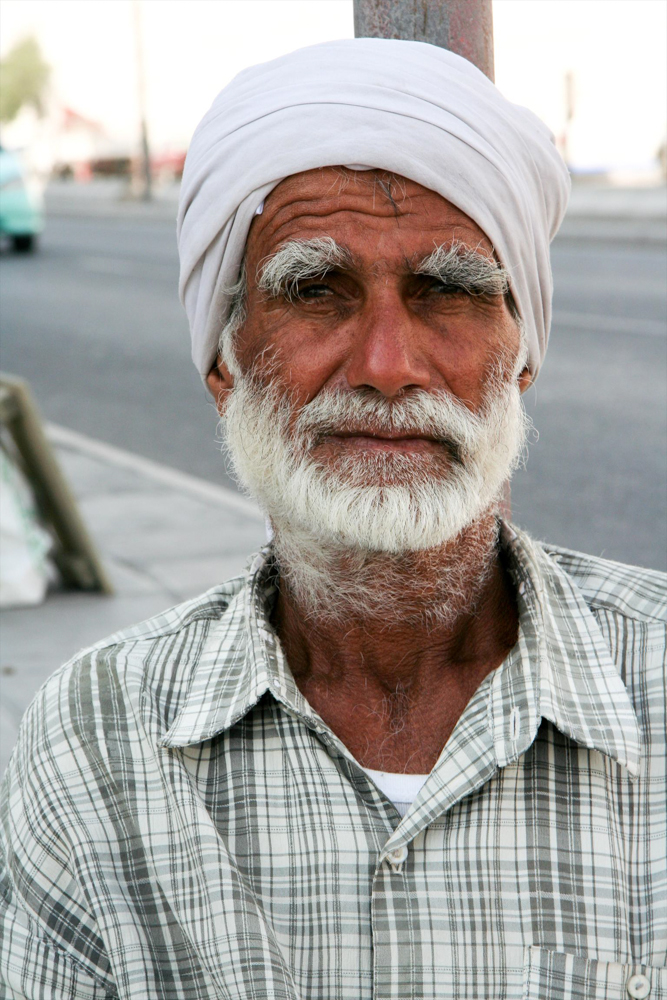
Oman travelThere has been no visible change in recent years in the situation for Christians in Oman. Islam is the state religion and Sharia (Islamic law) forms the basis for legislation. The very concept of a change of faith for an Omani citizen is anathema. An Omani convert faces problems under the Personal Status and Family Legal Code, which prohibits a father from having custody of his children if he leaves Islam.

All religious organisations must register and Christian meetings are monitored for political messages and nationals who may be attending. Although no violent persecution has been reported, there have been deportations of expat Christians in the past. This was primarily because of their open witness, which is prohibited by law. Permission is needed from the authorities for the distribution of religious literature also.
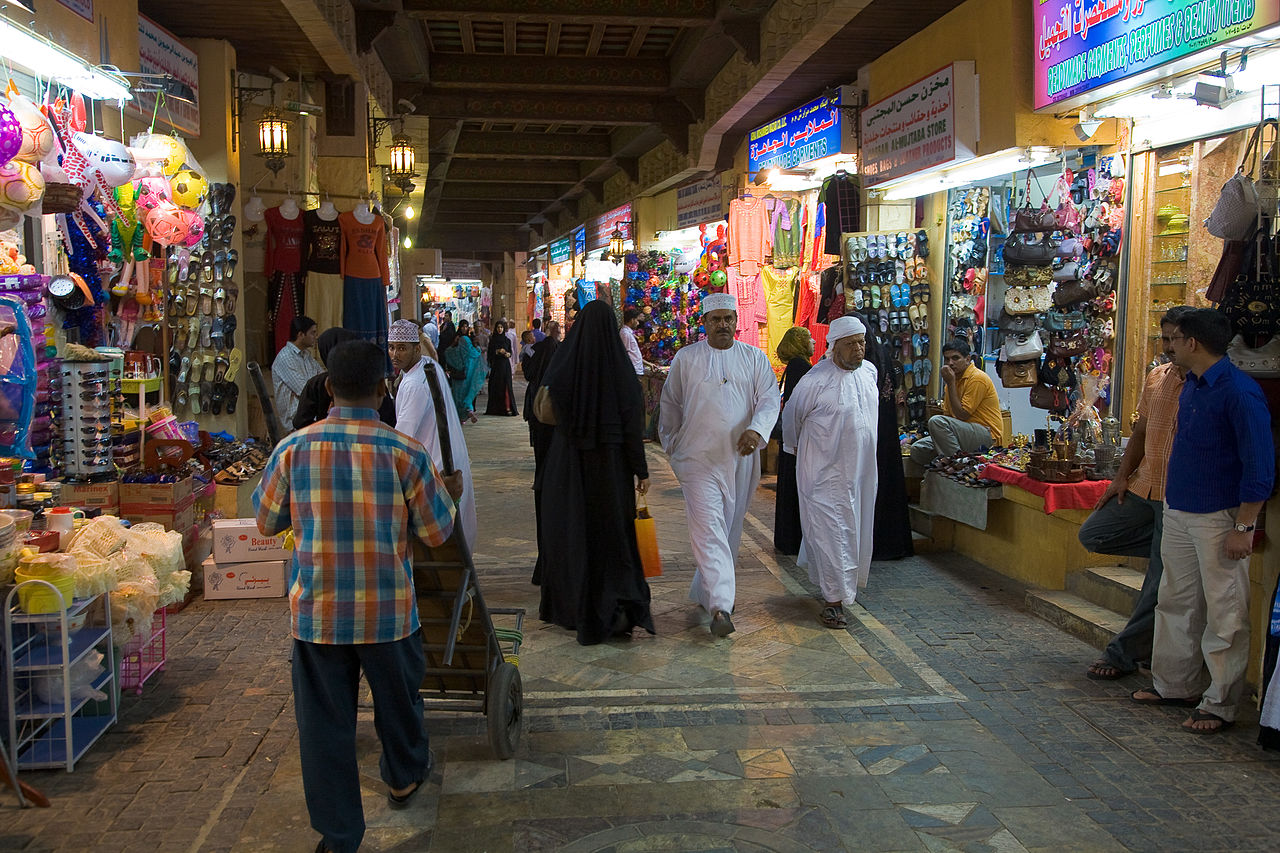
Oman BazzaarTOP TEN – things to know about what life is like for Christians in Oman

  1. The law prohibits religious discrimination but all religious organizations must register.
  2. All public school curriculums (grades K-12) include instruction in Islam.
  3. Almost the entire Christian population (around 35,000) is made up of expatriates; indigenous Christians number only a few hundred.
  4. Foreign Christians are often tolerated and allowed to worship in private homes or work compounds.
  5. The government records religious affiliation on national identity cards for citizens and on residency cards for non-citizens.
  6. Muslim Background Believers risk persecution from family and society, but the government may intervene on request from the family. In such cases, these believers are often treated as psychiatric patients.
  7. Muslim Background Believers can lose their family, house, and job and can even be killed.
  8. There are some government limitations on proselytizing and printing religious material. Non-Muslim groups are prohibited from publishing religious material, although non-Muslim religious material printed abroad may be imported after government inspection and approval.
  9. The Protestant Church in Oman (PCO) is the fruit of the active presence of RCA, a branch of the Reformed Church of America (RCA), which started its work in Oman in 1893.
  10. Currently PCO, under the combined leadership of the Reformed Church of America and the Anglican Church, ministers to over 1000 believers from 60 countries.

Indonesian Christians Singing at PCO (Protestant Church in Oman)
________________________________________

Please pray for Christians in Vietnam – World Watch List #21

Please pray for the Persecuted Church in VietnamWorld Watch List #21 (Open Doors USA)

Vietnam Map
Vietnam

VIETNAM (Wikipedia)

Population: 89.7 million (9.7 million Christians)
Main Religion: Buddhism
Government: Communist state
Source of Persecution: Communist oppression/dictatorial paranoia

Vietnam womenChristians are perceived as Western agents and the state, with the help of tribal leaders, watches churches closely. The government requires permits for larger gatherings and issues them last minute – if at all – to deter people from attending. Converts from Buddhism come under pressure from family and community, and authorities in tribal areas often hire gangsters to harass pastors and new believers. The government has begun placing more restrictions on Christians in the wake of the Arab Spring.

Vietnam woman and childPLEASE PRAY: More than a dozen believers were imprisoned in 2012.

  • Pray for strength and perseverance for Christians in prison.
  • Pray for Christians from ethnic minority groups, like the Hmong, who face great pressure to return to traditional beliefs.
  • Pray for safety for those distributing Open Doors’ Illustrated Children’s Bible. Importing Christian materials is prohibited.

PERSECUTION DYNAMICS

Vietnam streetVietnam is one of the remaining countries in the world following a Communist ideology. The authorities still perceive Christianity as a foreign influence and Christians from a tribal background like the Hmong face pressure to return to traditional faith, especially in rural areas. Gatherings are suspected as meetings to plot against the government and are closely monitored.

Obtaining recognition for churches or permission to renovate a church building is a long process. In 2012, at least seven churches, all Catholic, were confiscated. Training of leaders has to be done secretly and integrating converts has to be done very cautiously. Importing Christian materials is prohibited. Christians face violence and are sent to prison, not officially because of their faith, but because of ‘anti-government’ propaganda. It is unlikely that the situation will change substantially in the coming years.

ANECDOTAL ACCOUNT – “Vietnamese Authorities Hire Gangsters to Harass Christians” (Open Doors)

Pastor Training
Pastor Training

“Kneel! Kneel!” shouted a village thug. Unfazed by the threats, Pastor Vinh* stood his ground. In Vinh’s culture, kneeling is seen as an admission of guilt. Although authorities prohibited planting of new churches, Vinh would not allow their threats to stop him from spreading the gospel message.

“He was one of the most promising students in the class,” explained by Vinh’s spiritual mentor. “He was very passionate to share God’s word and had a deep love for Jesus.”

The leader of the gang began battering Vinh’s knee with a lead pipe in an attempt to force the pastor to his knees. The tall and well-built, 24-year-old Bible school student endured the series of blows and still refused to kneel. Continue reading “Please pray for Christians in Vietnam – World Watch List #21”

Church in northern Arabia longs for ‘place to worship’

By Adelaide Mena

Washington D.C., May 30, 2013 / 04:05 am (CNA).-

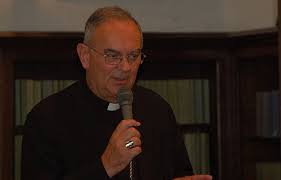
As he oversees the missionary territory of Saudi Arabia, Kuwait, Qatar and Bahrain, apostolic vicar Camillo Ballin outlined Catholics’ need for religious toleration as well as a physical home for ministry.

image
Bishop Camillo Ballin, Vicar Apostolic of Northern Arabia. Credit: Addie Mena/CNA.

A native of Italy, Bishop Ballin set out to study Arabic and Islam in order “to discover another world” after his ordination as a priest of the Comboni Missionaries.

In a May 29 interview with CNA, he noted that his travels have taken him to Egypt, Lebanon, Syria, Sudan, and eventually to his 2005 appointment as apostolic vicar of Kuwait.  His vicariate – otherwise known as an ecclesiastical jurisdiction within the Church where a hierarchy is not yet fully organized – was expanded in 2011 to include the whole of the Northern Arabian Peninsula, which oversees Kuwait, Bahrain, Qatar and Saudi Arabia.

The area has supported a Christian population since before the advent of Islam, a fact that many Christians in the area look to for inspiration, Bishop Ballin said. As an example, he pointed to church within the vicariate that is dedicated to St. Arethas and the 400 martyrs that were persecuted and killed over a century before Islam came to the area.

Today, ministry within the vicariate focuses upon the spiritual sustenance of 2.5 million Christians in the area, Bishop Ballin said.

Continue reading “Church in northern Arabia longs for ‘place to worship’”

Please pray for Christians in Qatar – World Watch List #20

Persecuted Church in QATAR (Wikipedia) – World Watch List #20 (Open Doors UK)

Qatar-mapPopulation: 1.9 million (90,000 Christians)
Main Religion: Islam
Government: Republic
Source of Persecution: Islamic extremism/Dictatorial paranoia

The state religion is conservative Islam and nearly all Qatari citizens are Sunni or Shia Muslims. Christian worship is only allowed in designated religious complexes, of which there are only two at the moment, which makes them easier to control and monitor. Many expat labourers are denied access to these complexes as they live too far away or are prevented from attending by employers. A Muslim who converts is considered an apostate and may face the death penalty. Foreign workers who evangelise non-Muslims are frequently deported.

Qatar manPLEASE PRAY:

  • Thank God that a new Christian complex is to be completed this year and other places of worship are being built
  • For printed and digital Bible resources in Qatari and Asian languages to become available
  • That foreign Christians will have opportunities to share the love of Jesus

PERSECUTION DYNAMICS

Christianity entered Qatar in the early centuries AD, before being driven out. Over the past 100 years, expats (including Christians) have arrived. Public worship of religions other than Islam was prohibited until recently. There are some Christian places of worship. Most Qataris are unhappy with this, yet no explicit opposition has been displayed.

A typical Friday morning mass at the Catholic Church in Qatar
A typical Friday morning mass
at Catholic Church in Qatar

There is, however, a flip side – as Christian worship will only be allowed in a designated religious complex, there is a risk of ghettoisation. The concentration of Christian activities in one spot provides opportunity to control and monitor Christians.

There are more than 100 informal fellowships gathering in homes and generally tolerated by authorities. The Qatari Constitution declares that ‘freedom to practice religious rites shall be guaranteed’ yet in reality, expat Christians are restricted. The government prohibits proselytizing of non-Muslims and foreign workers who evangelize are frequently deported. Fear is a significant factor and a Muslim who converts is considered an apostate and may face the death penalty.
_____________________________
What Life Is Really Like For Christians In Qatar

This tiny country along the Arabian Peninsula is home to the Al Jazeera news agency, Continue reading “Please pray for Christians in Qatar – World Watch List #20”

Please pray for Christians in Turkmenistan – World Watch List #19

PERSECUTED CHURCH in TURKMENISTANWorld Watch List #19 (Open Doors)

Turkmenistan "Caucasus and Central Asia"
Turkmenistan
“Caucasus and Central Asia”

Population: 5.2 million (95,000 Christians)
Main Religion: Islam
Government: One-party state
Source of Persecution: Dictatorial paranoia/Organised corruption

The state exerts strict control in order to avoid the emergence of any independent economic, social or cultural groups – which includes churches. All unregistered religious activity is illegal and the government uses the ‘Council on Religious Affairs’, police and the secret services to keep the church under surveillance. The frequency of raids, even on registered churches, has increased and obtaining registration is nearly impossible. Formal religious education is almost totally banned, as are all religious publications.

Turkmen woman and childPLEASE PRAY:

  • For Muslim-background believers who face more problems than other Christians, including physical attacks
  • That government officials will be willing to register churches
  • Give thanks that Pastor Ilmurad was released from prison in 2012; he must now report to the police each week.

PERSECUTION DYNAMICS

Delegates attend a session of Turkmenistan's Halk Maslakhaty (People's Assembly) to decide who will succeed late President Saparmurat Niyazov in Ashgabat December 26, 2006.
Delegates attend a session of Turkmenistan’s Halk Maslakhaty (People’s Assembly) to decide who will succeed late President Saparmurat Niyazov in Ashgabat December 26, 2006.

Turkmenistan is one of the most corrupt countries in the world. It is very rich, mainly due to large gas fields, but the riches only benefit a small minority. Muslim-background believers face pressure from both their families and the community. All Christians are treated with mistrust yet Muslim-background believers face significantly more problems in this regard, including being physically harmed.

All unregistered religious activity is strictly illegal and registering a church is nearly impossible. The Russian Orthodox Church faces less problems in this regard. Formal religious education is almost totally banned and all religious publications are forbidden. Former President Niyazov’s book ‘Ruhnama’, which links Turkmen identity with Islam, continues to have an influence and is reportedly still used in school and university curricula. Arbitrary treatment, raids, fines and court charges will go on as long as the ruling elite perceives every group it cannot control as a threat to their absolute power.

ANECDOTAL REPORT – Begjan Shirmedov

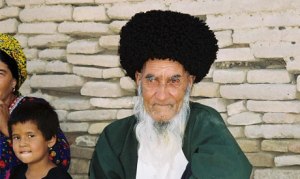
turkmenistan-manA group of about six officials – two of them in police uniforms – raided Begjan Shirmedov’s home in Dashoguz in the North of Turkmenistan on Sunday 23 September. They arrived during a house meeting of his Baptist congregation, Path of Faith Church, attended by about 15 church members.

The officials told them that religious activity without state registration is illegal. The believers replied that they have been attempting to obtain registration in vain since 2004.

Police searched every room in the house and confiscated all Christian literature and CDs. When they asked where the literature had come from, family members insisted they had collected the books over many years as they have been Christians since the mid-1990s.

About 15 church members, women and children included, were taken away to be questioned. According to a Forum 18 report “Begjan Shirmedov was dragged out of the house by his collar”. Begjan is 77 years old, an elderly man who according to the Turkmen tradition should be treated with more respect. “They treated an elderly man like a tramp in front of his wife, his children, church members and neighbours without fear of having to answer for their actions.”

Meanwhile the other church members were fingerprinted and questioned about their religious activity. Later that day they were released.