Egypt’s Christians vs “the Lions” – Raymond Ibrahim Re-Blog

U.S. ASKS EGYPT’S CHRISTIANS NOT TO OPPOSE MORSI

By: Raymond Ibrahim 6/26/2013
image

As Egyptians of all factions prepare to demonstrate in mass against the Muslim Brotherhood and President Morsi’s rule on June 30, the latter has been trying to reduce their numbers, which some predict will be in the millions and eclipse the Tahrir protests that earlier ousted Mubarak.

image
Egypt's Coptic Pope Tawadros II

Among other influential Egyptians, Morsi recently called on Coptic Christian Pope Tawadros II to urge his flock, Egypt’s millions of Christians, not to join the June 30 protests.

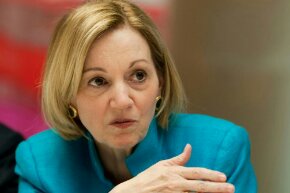
While that may be expected, more troubling is that the U.S. ambassador to Egypt is also trying to prevent Egyptians from protesting—including the Copts. The June 18th edition of Sadi al-Balad reports that lawyer Ramses Naggar, the Coptic Church’s legal counsel, said that during Patterson’s June 17 meeting with Pope Tawadros, she “asked him to urge the Copts not to participate” in the demonstrations against Morsi and the Brotherhood.

The Pope politely informed her that his spiritual authority over the Copts does not extend to political matters.
image
US Ambassador Anne Patterson

Regardless, many Egyptian activists are condemning Patterson for flagrantly behaving like the Muslim Brotherhood’s stooge. Leading opposition activist Shady el-Ghazali Harb said Patterson showed “blatant bias” in favor of Morsi and the Brotherhood, adding that her remarks had earned the U.S. administration “the enmity of the Egyptian people.” Coptic activists like George Ishaq openly told Patterson to “shut up and mind your own business.” And Christian business tycoon Naguib Sawiris—no stranger to Islamist hostility—posted a message on his Twitter account addressed to the ambassador saying “Bless us with your silence.”

Indeed, the U.S. ambassador’s position as the Brotherhood’s lackey is disturbing—and revealing—on several levels. First, all throughout the Middle East, the U.S. has been supporting anyone and everyone opposing their leaders—in Libya against Gaddafi, in Egypt itself against 30-year U.S. ally Mubarak, and now in Syria against Assad. In all these cases, the U.S. has presented its support in the name of the human rights and freedoms of the people against dictatorial leaders.

So why is the Obama administration now asking Christians not to oppose their rulers—in this case, Islamists—who have daily proven themselves corrupt and worse, to the point that millions of Egyptians, most of them Muslims, are trying to oust them?
image
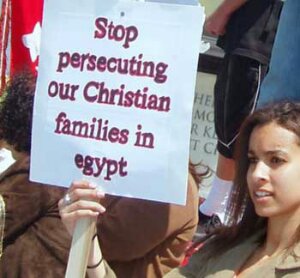
Egyptian Christians face increasing persecution from the Islamists in control of the state.

What’s worse is that the human rights abuses Egypt’s Coptic Christians have been suffering under Muslim Brotherhood rule are significantly worse than the human rights abuses that the average Egyptian suffered under Mubarak—making the Copts’ right to protest even more legitimate, and, if anything, more worthy of U.S support.

Among other things, under Morsi’s rule, the persecution of Copts has practically been legalized, as unprecedented numbers of Christians—men, women, and children—have been arrested, often receiving more than double the maximum prison sentence, under the accusation that they “blasphemed” Islam and/or its prophet.

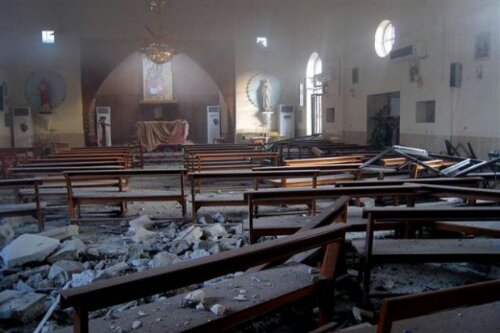
It was also under Morsi’s reign that another unprecedented scandal occurred: the St. Mark Cathedral—holiest site of Coptic Christianity and headquarters to the Pope Tawadros himself—was besieged in broad daylight by Islamic rioters. When security came, they too joined in the attack on the cathedral. And the targeting of Christian children—for abduction, ransom, rape, and/or forced conversion—has also reached unprecedented levels under Morsi.

(For more on the plight of the Copts under Morsi’s rule, see my new book Crucified Again: Exposing Islam’s New War on Christians.)

Yet despite the fact that if anyone in Egypt has a legitimate human rights concern against the current Egyptian government, it most certainly is the Christian Copts, here is the U.S., in the person of Ms. Patterson, asking them not to join the planned protests.

In other words, and consistent with Obama administration’s doctrine, when Islamists—including rapists and cannibals—wage jihad on secular leaders, the U.S. supports them; when Christians protest Islamist rulers who are making their lives a living hell, the administration asks them to “know their place” and behave like dhimmis, Islam’s appellation for non-Muslim “infidels” who must live as third class “citizens” and never complain about their inferior status.

Raymond Ibrahim is author of Crucified Again: Exposing Islam’s New War on Christians. He is a Shillman Fellow at the David Horowitz Freedom Center and an Associate Fellow at the Middle East Forum.
“Life as a Woman in the Context of Islam” (YouTube)

Peanut Gallery: Here is another excellent interview with a Muslim-background believer sharing her experiences as a woman…. from Dallas Theological Seminary.

Please pray for Christians in Tanzania – World Watch List #24

image
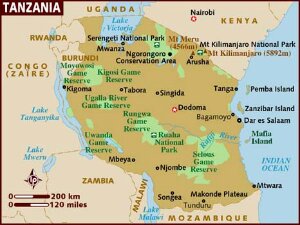
Map of Tanzania

TANZANIA (Wikipedia) – World Watch List #24 (Open Doors UK)

Population: 47.7 million (29.5 million Christians)
Main ReligionChristianity/Islam
Government:</strong> democratic republic
Source of Persecution
: Islamic extremism

A Christian majority country with a substantial Muslim population, there is a strong Islamist drive towards the Tanzanian ‘House of Islam’. On the mainland, Muslim-background believers face difficulties but not extreme persecution.

However, on the Zanzibar archipelago, Islamic militants bent on wiping out all Christians from the islands have burnt and looted churches and threatened Christians with death. The push for the spread of Islam is less violent but equally persistent on the mainland. If successful, it could threaten the presence of the church on the Zanzibar archipelago.

image

PLEASE PRAY:

+ For wisdom for those involved in the constitutional review process. Pray that pressure from Islamic extremists will be resisted and freedom of religion protected  
+ For protection for church leaders on Zanzibar and Pemba islands
+ Give thanks for freedom to preach the gospel. Pray that Christians will have courage to share God’s love with Muslims.

PERSECUTION DYNAMICS:

The Zanzibar archipelago makes up only a very small part of Tanzania and has a president and a semi-autonomous political structure, separate from the mainland political system. Tanzania is a Christian majority country with a very substantial Muslim population. There is a strong Islamist drive towards the Tanzanian ‘House of Islam’.

The situation for Muslim-background believers is difficult but not extreme. The state hasn’t declared Islam as a prescriptive national religion and local governments seem to respect this rather well. However, Muslim-background believers have still been forced to flee their homes, and had their spouses forcefully married to another Muslim.

image
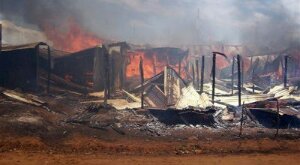
The aftermath of religion-linked violence in Geita, Tanzania (IRIN)

In Zanzibar there was serious violence, driven by ‘Vugu vugu la uamsho’ (‘Revival Movement for the Preservation of Islam’). It claimed to be wiping out all Christians from the Zanzibar archipelago, mainly Zanzibar Island. Churches were burnt, church property looted and Christians, especially church leaders, were threatened with death.

image
Church in Njombe, Tanzani

The Zanzibar archipelago is a very serious instigator of hostilities against Christians, not only on the islands but also on mainland Tanzania. They have strong Islamic militant groups that often persecute Christians heavily.

On mainland Tanzania the push for the further spread of Islam is less violent but equally persistent. Part of this push is through the constitutional review process, and strategic infiltration of main sectors of society. If the push for secession succeeds, the presence of the church on Zanzibar and Pemba Islands is likely to be reduced to (nearly) zero. The frantic moves of Islamists in mainland Tanzania will continue. For the church, this means difficult times are likely to be ahead.

RECENT DEVELOPMENTS

Tanzania was once celebrated as a role model for peace in Africa, but is no longer being considered ‘safe’ after an increase in inter-faith violence, with little evidence so far of perpetrators being brought to justice. A blast outside St Joseph’s Roman Catholic Church in Arusha, a town popular with tourists visiting the Serengeti national park and Mount Kilimanjaro, was just the most recent example.

image

The newly built church, in the Olasti district on the outskirts of Arusha, was celebrating its first ever mass at the time of the attack, which left three dead and more than 60 injured.

Tension has been building between the two most populous religious communities in Tanzania – Christians comprise 62 percent of the population, while 35 percent is Muslim (Pew, 2010).

image
Father Evaristus Mushi, 1956 – 2013

In Zanzibar, which is 97 percent Muslim, arsonists burned the Evangelical Church of Siloam on February 19, two days after gunmen killed a Catholic priest, Father Evaristus Mushi, in the Motni area of the island.

image

Earlier that month, an Assemblies of God minister, Pastor Mathayo Kachili, was hacked to death in the Geita region of Lake Victoria, when he intervened in an altercation between villagers over the slaughter of an animal, after the local government had granted Christians the right to practice as butchers.

Morning Reading: Acts 8.1-3 NLT – persecution

Reading: Acts 8.1-3 NLT

persecuted christiansSaul was one of the witnesses, and he agreed completely with the killing of Stephen.

A great wave of persecution began that day, sweeping over the church in Jerusalem; and all the believers except the apostles were scattered through the regions of Judea and Samaria. (Some devout men came and buried Stephen with great mourning.)

But Saul was going everywhere to destroy the church. He went from house to house, dragging out both men and women to throw them into prison.

Prayer: Heavenly Father – Protect your church throughout the world… every size, shape, language and custom. Hold your people close to your heart. Holy Spirit – Come alongside of every Christian imprisoned, or persecuted, for their faith in Jesus Christ… comfort them, defend them, strengthen them, release them. Lord Jesus – Be their Shepherd, their Savior, their Rock… and send your guardian angels to fight in their defense. And may you be glorified in the suffering of all those who have placed their trust in you. Amen.

Spiritual Song: “O Lord Hear My Prayer”Jacques Berthier

Please pray for Christians in Mauritania – World Watch List #23

MAURITANIA (Wikipedia)

Mauritania mapPopulation: 3.6 million (4,500 Christians)
Main Religion: Islam
Government: Islamic republic
Source of Persecution: Islamic extremism

Mauritania is proud to be a pure Muslim country, and its laws prohibit conversion to the Christian faith. Harsh government restrictions make it very difficult for Christian missions to operate here. Religious beliefs and practices are strongly restricted by government policies, although the government is weak in enforcing them. Pressure on Muslim-background believers from family, tribe members and local Muslim leaders is very high. The Arab Spring has not yet had an impact but Islam extremism is becoming more influential.

Mauritania_WomanPLEASE PRAY:

  • There were reports of believers being beaten for their faith in 2012. Pray for protection and perseverance for God’s people
  • Al-Qaeda in the Maghreb is monitoring Christian activity. Pray that its influence will diminish
  • That literacy and translation projects will give more Mauritanians access to the Bible in their own language.

PERSECUTION DYNAMICS

Mauritania is not often in the news and seems to have been forgotten by the international community. Very little attention has been given to the suffering of the small, local church. The country’s constitution does not include any provisions for religious freedom and its laws prohibit conversion to the Christian faith. Pressure on Muslim-background believers from family, tribe members and leaders of local mosques is constant throughout the country.

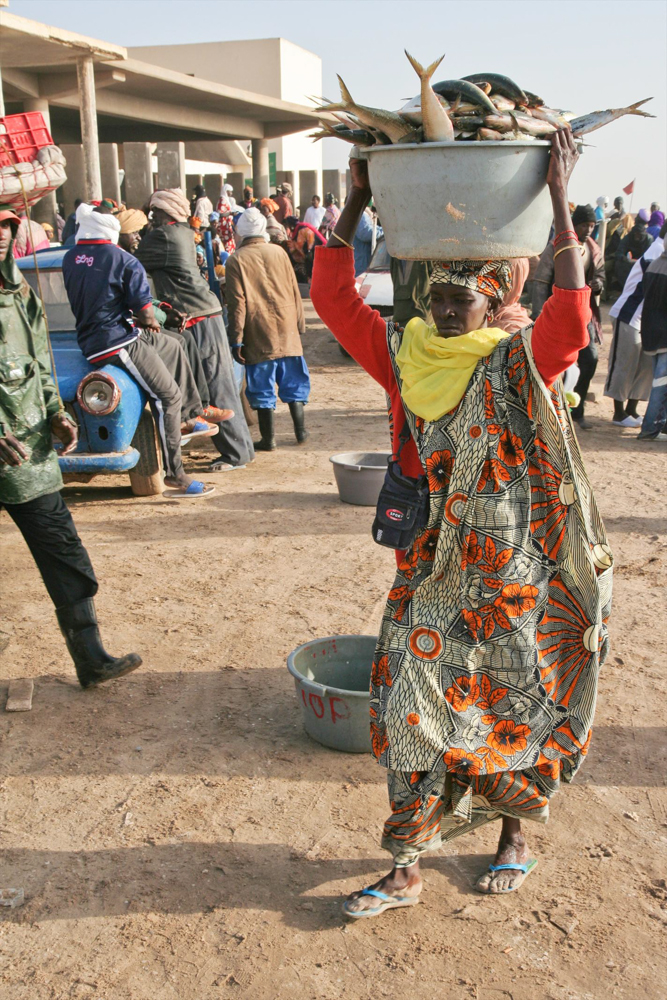
Mauratania woman carrying fishIn December 2012, Islamist Members of Parliament questioned the government about their attitude towards foreign Christian organisations and in July 2011, the council of Mauritanian Imams asked the government to criminalise obvious apostasy and proselytising. The influence of al-Qaeda in the Maghreb is growing and attempting to monitor Christian activity in the country.

BACKGROUND – There are a few countries on the World Watch List that we can’t share stories from. Even if we were to use different names, the Christian population is so small, that the story could easily be traced back to the individual. For their security, we are providing a different way to pray for the country this week.

Here are the top 10 things to know about what life is like for Christians in Mauritania:

1 – Mauritania has been under military rule for more than 30 years, with only a short democratic interruption in 2007. Promises to bring democracy back to the country have only resulted in rigged elections.

image
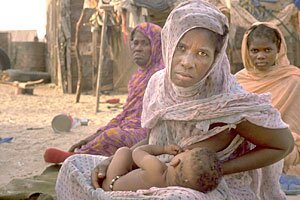
A woman breastfeeds her infant at a health centre. Lack of food and limited access to basic services have contributed to a rising rate of malnutrition in children.

2 – Mauritania is one of the world’s poorest countries. One third of the children are malnourished, and when there is enough food, it is often too expensive for the poor to afford.

3 – During the winter of 2010/2011 several articles in the local media portrayed the “foreign” activities in Mauritania, including the names and the organizations deemed most guilty of Christianization. In early July 2011, some prominent Imams published their request to the Mauritanian parliament to protect the Mauritanian people from hearing the Gospel and to reject every Christian organization by a fight to have every attempt of sharing the Gospel in Mauritania curtailed.

image
Militiaman from the Ansar Dine Islamic group, who said they had come from Niger and Mauritania, ride on a vehicle at Kidal in northeastern Mali, in this 16 June 2012 file photo. (Photo: Reuters - Adama Diarra)

4 – The main persecution dynamic in Mauritania is ‘Islamic extremism’ which has become more visible demonstrating the growing influence of Salafism.

5 – The first locals coming to Jesus were reported in the 90s. Mauritanian believers are few (with estimates ranging from around 150 all the way to 700).

image
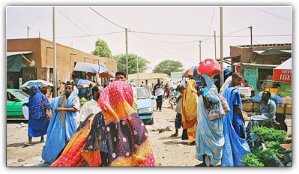
A market in Nouakchott, the capital of Mauritania, where Christians make up a tiny 0.16% of the populatio

6 – Many Christians don’t know the Ten Commandments and their ethics are influenced by the Muslim environment. It seems that the lack of biblical knowledge creates ethic problems. Other difficult obstacles for the church are its poverty and the illiteracy.

7 – The Church is divided in many groups. Some of them are united in networks but many believers are alone in their villages. In the countryside, Mauritanian leaders notice an interest for the faith issues and the Bible. The testimonies of the believers arrested and tortured in 2009 have encouraged more local believers to share about Jesus in the country.

image
The most common threat to Christians abroad is militant IslamPicture: ALAMY

8 – Pressure on Muslim Background Believers from family, tribe members and leaders of local mosques, is very high. There is some freedom for expat churches, but even for expats residing in the country, it is complicated. It remains completely impossible for Mauritanian Christians to register their churches, so they must meet in secret.

9 – There are many barriers such as low literacy rates, no Scriptures completed in Hassaniya Arabic, only a few local radio broadcasts from Senegal, and laws that forbid Mauritanians from hearing the gospel or believing in Jesus.

10 – Al-Qaeda in the Maghreb is monitoring Christian activity.