Christian “martyr” deaths double in 2013 – reported by Open Doors (Reblog)

Reuters

8:12 am, January 8, 2014

image

* Syria tops “martyr count” with more than 2012 global total

* North Korea still most dangerous state for Christians

* Violence against Christians rising in Africa

By Tom Heneghan, Religion Editor (click on link for original article)

LONDON, Jan 8 (Reuters) – Reported cases of Christians killed for their faith around the world doubled in 2013 from the year before, with Syria accounting for more than the whole global total in 2012, according to an annual survey.

Open Doors, a non-denominational group supporting persecuted Christians worldwide, said on Wednesday it had documented 2,123 “martyr” killings, compared with 1,201 in 2012. There were 1,213 such deaths in Syria alone last year, it said.

“This is a very minimal count based on what has been reported in the media and we can confirm,” said Frans Veerman, head of research for Open Doors. Estimates by other Christian groups put the annual figure as high as 8,000.

The Open Doors report placed North Korea at the top of its list of 50 most dangerous countries for Christians, a position it has held since the annual survey began 12 years ago. Somalia, Syria, Iraq and Afghanistan were the next four in line.

The United States-based group reported increasing violence against Christians in Africa and said radical Muslims were the main source of persecution in 36 countries on its list.

“Islamist extremism is the worst persecutor of the worldwide church,” it said.

WAR AGAINST THE CHURCH

Christianity is the largest and most widely spread faith in the world, with 2.2 billion followers, or 32 percent of the world population, according to a survey by the U.S.-based Pew Forum on religion and Public Life.

It faces restrictions and hostility in 111 countries, ahead of the 90 countries limiting or harassing the second-largest faith, Islam, another Pew survey has reported.

Michel Varton, head of Open Doors France, told journalists in Strasbourg that failing states with civil wars or persistent internal tensions were often the most dangerous for Christians.

“In Syria, another war is thriving in the shadow of the civil war — the war against the church,” he said while presenting the Open Doors report there.

About 10 percent of Syrians are Christians. Many have become targets for Islamist rebels who see them as supporters of President Bashar al-Assad.

Nine of the 10 countries listed as dangerous for Christians are Muslim-majority states, many of them torn by conflicts with radical Islamists. Saudi Arabia is an exception but ranked sixth because of its total ban on practicing faiths other than Islam.

In the list of killings, Syria was followed by Nigeria with 612 cases last year after 791 in 2012. Pakistan was third with 88, up from 15 in 2012. Egypt ranked fourth with 83 deaths after 19 the previous year.

The report spoke of “horrific violence often directed at Christians” in the Central African Republic but said only nine deaths were confirmed last year because “most analysts still fail to recognise the religious dimension of the conflict.”

NORTH KOREA

The report had no figures for killings in North Korea but said Christians there faced “the highest imaginable pressure” and some 50,000 to 70,000 lived in political prison camps.

“The God-like worship of the rulers leaves no room for any other religion,” it said.

There was now “a strong drive to purge Christianity from Somalia,” the report added, and Islamist attacks on Iraqi Christians have been increasing in the semi-autonomous Kurdish north, formerly a relatively safe area for them.

Veerman, based near Utrecht in the Netherlands, said that killings were only the most extreme examples of persecutions. Christians also face attacks on churches and schools, discrimination, threats, sexual assaults and expulsion from countries.

Open Doors, which began in the 1950s smuggling Bibles into communist states and now works in more than 60 countries, estimated last year that about 100 million Christians around the world suffered persecution for their faith.
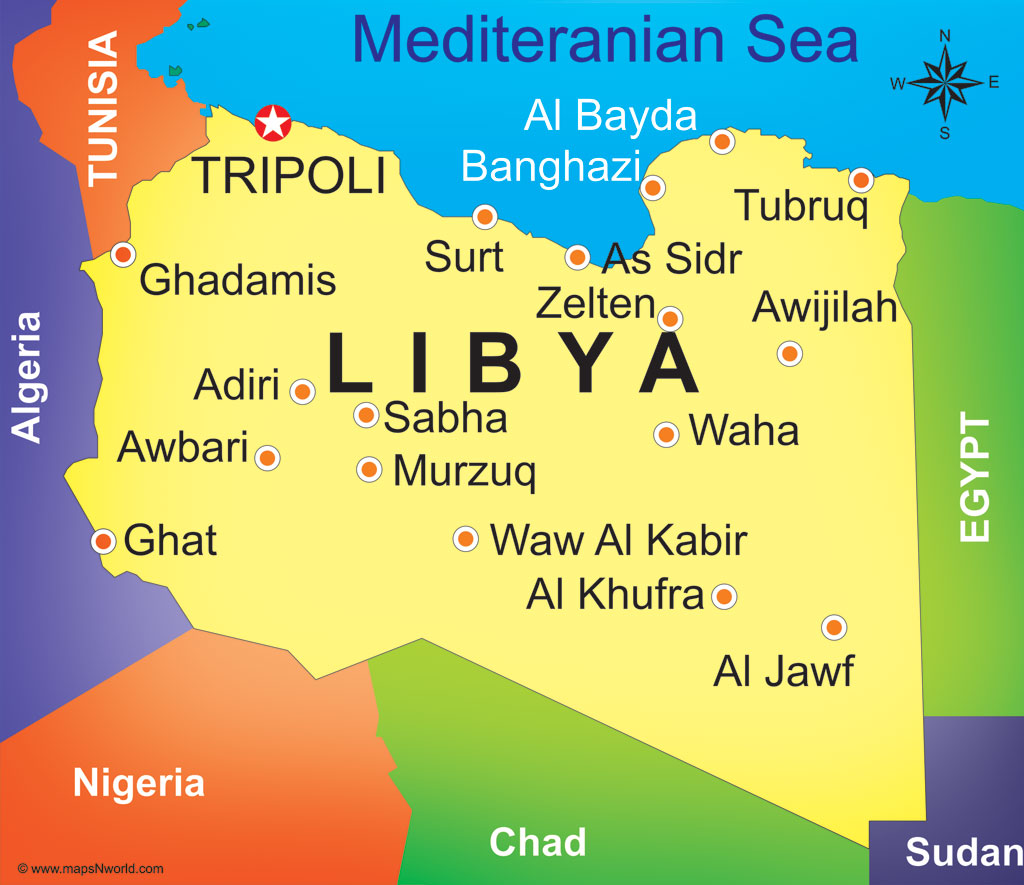
Please pray for Libyan Christians: Libya #17 World Watch List

Persecuted Church in LIBYA – World Watch List #17 (Open Doors UK)

libya-mapLIBYA (Wikipedia) –
Population: 6.5 million (35,000 Christians)
Main Religion: Islam
Government: Transitional government
Source of Persecution: Islamic extremism

Muammar_al-Gaddafi_at_the_AU_summitDuring Gaddafi’s reign, the main source of persecution was the government and its secret services. Today opposition comes from the family, community and fanatical armed groups. But it is still forbidden to import Arabic Scriptures or to evangelise. There is no central government and the rule of law is absent, so Islamist extremist movements like the Salafists are able to perpetrate violence upon believers. Because of the civil unrest, 75 per cent of expat Christians have left the country.

PLEASE PRAY:
Libya_Jihad

  • For strength for secret Christians; they are forbidden from meeting together
  • For a stable government that rules wisely and with justice
  • Give thanks that Christian programmes on TV, radio and the internet are generating growing interest in the Christian faith.

PERSECUTION DYNAMICS

Libyan Arab
Libyan Arab

Under Gaddafi’s rule, conditions for Christians were extremely harsh and Libya did not even have a real constitution. The feared and omnipresent secret police made sure restrictions on church activities and distribution of literature were enforced and evangelism criminalised. Muslim background believers were always at risk from their families and most Libyan Christians were afraid to meet as any kind of religious gathering was forbidden. Expats were allowed churches but Libyans were not allowed to attend.

The Libyan revolution has not brought Christians protection and freedom

The revolutions in Egypt and Tunisia gave Libyans the courage to fight Gaddafi, but despite this leading to Gaddafi’s death, it is feared that the future will be worse. Because of the unrest, an estimated 75 per cent of expat Christians have left the country. The National Transitional Council, who took over after Gaddafi, have repeatedly announced their intent to implement a ‘democracy according to Sharia’ in Libya, in which all citizens are already considered Sunni Muslim by law.

The main sources of persecution today are family, community, fanatical armed groups and, to a lesser extent, the government. To import Arabic Scriptures remains strictly forbidden and proselytising and missionary activity is officially prohibited. Many Libyan Christians are fleeing their homeland. It is unlikely that the situation will change, even with a new constitution.

ANECDOTAL REPORT / REQUEST FOR PRAYER:

Sherif is Egyptian, running a bookshop in Benghazi, in the East of Libya. He was arrested on February 10th and has been detained since then. During his detainment he has been physically abused, while there is no official charge against him, nor has he appeared before court.

Recently, some Egyptians and three non-Arab workers have also been arrested. Continue reading “Please pray for Libyan Christians: Libya #17 World Watch List”

Please pray for Ethiopian Christians – World Watch List #15

Ethiopian Christian Orthodox Worshippers 2Peanut Gallery: Ethiopia has considered itself a Christian country since the fourth century, and its Christian roots are sometimes traced back to the Ethiopian eunuch who met Philip on the road while reading the book of Isaiah (Acts 8:26-40). Today it is the only Christian-majority country in the Horn of Africa, surrounded by a “sea” of Islam. (Barnabas Fund)

The source of persecution is twofold: the Ethiopian Orthodox Church (hostility towards the growing  Protestant Christian minority) and Islamic extremistism (hostility towards all Christians).
________________________________________

ETHIOPIA (Wikipedia)

Ethiopia_shaded_relief_map_1999,_CIAPopulation: 86.5 million (57 million Christians)
Main Religion: Christianity (Orthodox) – see Christianity in Ethiopia (Wikipedia)
Source of Persecution: Ecclesiastical arrogance (or Denominational elitism) and Islamic extremism
_________________
For years, the Ethiopian Orthodox Church has persecuted believers who have left their ranks or joined renewal movements. But Islamic extremism has now become the dominant source of persecution. Converts and ‘underground believers’ have to be very cautious to avoid being traced. Muslim fanatic group, Kewarjah, is repeatedly blamed for attacks against Christians in the south-west. A new law banning all religious messages and talks from public spaces is expected to bring a wave of restrictions against Christians.

Ethiopian Evangelical Church Mekane Yesus (Place of Jesus)

PLEASE PRAY:

  • For secret believers; there have been some violent attacks within families.
  • Violence against Christian women often goes unreported. Pray for protection for Christian women.
  • Thank God that Open Doors has been able to supply Bibles and training, as well as bicycles to pastors.

PERSECUTION DYNAMICS

Ethiopia rose sharply on the World Watch List in 2012. Protestant churches are the fastest growing movement in the country. “Underground movements” both in EOC and Muslim-majority areas have been reported as making incredible progress in their work, and EOC and Islamism will continue to see them as a threat. In the short term it is likely that persecution of Christians will increase sharply – all the more so because extremist Islam in Ethiopia is fuelled by external sources. The unresolved conflict in the east of the country is also attracting some extremist groups like al-Shaabab from neighbouring Somalia.

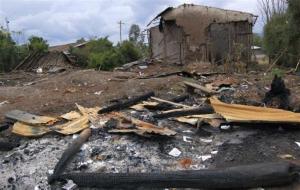
(A destroyed Protestant church in Asendabo, 300 km (200 miles) west of the capital Addis Ababa, March 16, 2011, after Muslim youths attacked Christians/Aaron Maasho )

Hostilities take different forms. There are the ‘normal’ hostilities represented by significant pressure in private and church life. Converts and almost all ‘underground believers’ have to take maximum care to avoid being traced. The level of violence is medium, although it is likely that several forms of physical violence are underreported, in particular, violence against Christian women. A church leader was stabbed to death by Muslims six hours’ walk from his home village in Western Ethiopia. Muslims singled out the leader because of his active role in evangelism and discipleship services in a newly started church.