Ten people are dead following clashes between Muslims and Coptic Christians in Egypt. The people have been killed over the past few weeks which have seen spates of violence between Christians defending their churches and homes from angry Muslims. Few Muslim attackers ever face justice.
CAIRO, EGYPT (Catholic Online) – Clashes between Muslims and Christians have claimed 10 live in Egypt where sectarian violence between the groups has been renewed in the face of Mohammed Morsi’s administration.
Copts in the USA protest the violence their families face in Egypt.
The most recent spate of violence started after children drew crosses on the walls of an Islamic institute in Khosoos, just north of Cairo. That acts of children’s vandalism sparked a bloody retaliation from Muslims in which four Christians and a Muslim were killed.
At the Christian funeral, Muslims struck again, this time carrying on until they reached the Coptic cathedral and damaged the structure. More Christians were murdered.
Note that it’s Muslims who are attacking Christian funeral processions, not the other way around.
Vandalism committed by children, particularly of a religious nature is unacceptable, however the punishment should not include murder. Nor should Muslims carry on the violence to the funerals of the people they murdered.
Pope Tawadros II, leader of Egypt’s Coptic Christians, has openly criticized President Morsi for his failure to stem the violence despite pledges to do so. The Muslim attackers are yet to face any repercussions for their violence.
Peanut Gallery: Ethiopia has considered itself a Christian country since the fourth century, and its Christian roots are sometimes traced back to the Ethiopian eunuch who met Philip on the road while reading the book of Isaiah (Acts 8:26-40). Today it is the only Christian-majority country in the Horn of Africa, surrounded by a “sea” of Islam. (Barnabas Fund)
The source of persecution is twofold: the Ethiopian Orthodox Church (hostility towards the growing Protestant Christian minority) and Islamic extremistism (hostility towards all Christians).
________________________________________
Population: 86.5 million (57 million Christians) Main Religion: Christianity (Orthodox) – see Christianity in Ethiopia (Wikipedia) Source of Persecution: Ecclesiastical arrogance (or Denominational elitism) and Islamic extremism
_________________
For years, the Ethiopian Orthodox Church has persecuted believers who have left their ranks or joined renewal movements. But Islamic extremism has now become the dominant source of persecution. Converts and ‘underground believers’ have to be very cautious to avoid being traced. Muslim fanatic group, Kewarjah, is repeatedly blamed for attacks against Christians in the south-west. A new law banning all religious messages and talks from public spaces is expected to bring a wave of restrictions against Christians.
Ethiopian Evangelical Church Mekane Yesus (Place of Jesus)
PLEASE PRAY:
For secret believers; there have been some violent attacks within families.
Violence against Christian women often goes unreported. Pray for protection for Christian women.
Thank God that Open Doors has been able to supply Bibles and training, as well as bicycles to pastors.
PERSECUTION DYNAMICS
Ethiopia rose sharply on the World Watch List in 2012. Protestant churches are the fastest growing movement in the country. “Underground movements” both in EOC and Muslim-majority areas have been reported as making incredible progress in their work, and EOC and Islamism will continue to see them as a threat. In the short term it is likely that persecution of Christians will increase sharply – all the more so because extremist Islam in Ethiopia is fuelled by external sources. The unresolved conflict in the east of the country is also attracting some extremist groups like al-Shaabab from neighbouring Somalia.
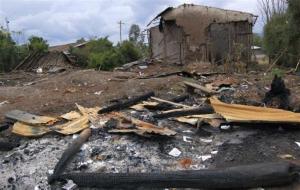
(A destroyed Protestant church in Asendabo, 300 km (200 miles) west of the capital Addis Ababa, March 16, 2011, after Muslim youths attacked Christians/Aaron Maasho )
Hostilities take different forms. There are the ‘normal’ hostilities represented by significant pressure in private and church life. Converts and almost all ‘underground believers’ have to take maximum care to avoid being traced. The level of violence is medium, although it is likely that several forms of physical violence are underreported, in particular, violence against Christian women. A church leader was stabbed to death by Muslims six hours’ walk from his home village in Western Ethiopia. Muslims singled out the leader because of his active role in evangelism and discipleship services in a newly started church.
Discrimination impacts all aspects of daily life. Opening a new church building is virtually impossible and emigration of Christians continues unabated. The Christian community is very vulnerable and sexual assaults on underage Christian girls by Muslim men continue to be reported.
PAKISTAN Population: 180 million (5.3 million Christians) Main Religion: Islam Government: Islamic Republic Source of Persecution: Islamic extremism/Dictatorial paranoia/Organised corruption
Christians are caught between Islamic militant organisations, an Islamising culture and a weak government with a military complicit in fuelling Islamic militants. The Rimsha Masih case prompted a debate on blasphemy laws, but others still face charges and extremist groups continue to incite hatred for Christians. Many Christians are uneducated manual workers who suffer unfair treatment from employers. Muslim men continue to sexually assault underage Christian girls. Opening a new church building is virtually impossible and emigration of Christians continues.
Asia Bibi
PLEASE PRAY:
Praise God that the laws of Pakistan give Christians considerable freedom to run established churches
Give thanks that the Christian population is growing and a steady but significant trickle of Muslims are joining churches
For imprisoned Christian Asia Bibi, sentenced to death on blasphemy charges.
PERSECUTION DYNAMICS
Persecution has been in evidence in Pakistan for many years and the country is set to surpass Indonesia as the world’s largest Muslim population by 2030. Christians account for 2.5 per cent of the population.
Rimsha Masih
In 2012 the case of Rimsha Masih, who was accused of having desecrated the Qu’ran, gained international attention. After three months in detention she was finally released in September and later exonerated of all charges. The case prompted a debate on how blasphemy laws are misused to target innocent people. Extremist groups continue to incite hatred for Christians: at the time Rimsha was released, other Christians were facing blasphemy charges.
Pakistani Christians search for salvageable belongings from the remains of their razed houses in Lahore on Monday (11 March 2013)
Discrimination impacts all aspects of daily life. Opening a new church building is virtually impossible and emigration of Christians continues unabated. The Christian community is very vulnerable and sexual assaults on underage Christian girls by Muslim men continue to be reported. Many Christians are uneducated manual workers who suffer unfair treatment from employers. There is, however, freedom to run established churches and the Christian population is slowly growing. Despite this, society neglects the Christian minority. Extremist views may well gain popularity in the coming elections, to the disadvantage of minorities.
Population: 166.6 million (88 million Christians) Main Religion: Islam Source of Persecution: Islamic extremism
The Islamist agenda to bring Nigeria under the ‘House of Islam’ versus the election of a southern Christian as President has caused much unrest. The Islamist group, Boko Haram, has claimed the lives of at least 800 Christians. The decisions of local government, especially in the twelve northern Sharia states, mean that Christians experience restrictions in schooling, threats of abduction, forced marriage, as well as denial of employment, clean water and healthcare. It is dangerous to convert and for churches to integrate new converts.
Please Pray:
Give thanks that believers are responding to recent pressure with increased prayer, evangelism and care for Muslim Background Believers
That Christian youths will resist the temptation to respond with violence to Muslim attacks
For Open Doors workers providing emergency support and trauma counseling to victims of attacks.
Persecution dynamics
The pattern of persecution in Nigeria is complex, especially for the twelve northern Sharia states, where local government and social groups leave hardly any space for Christians to live their own lives.
Conversion is dangerous and Muslim-background believers and Christians in many northern states suffer restrictions in schooling, threats of abduction and forced marriage. They have also been denied employment and facilities such as clean water, clinics and roads. It is very difficult for churches to openly integrate new converts from Islam.
Population: 30.9 million (number of Christians unknown)
Main Religion: Islam
Government: Republic
Source of Persecution: Islamic extremism/Dictatorial paranoia
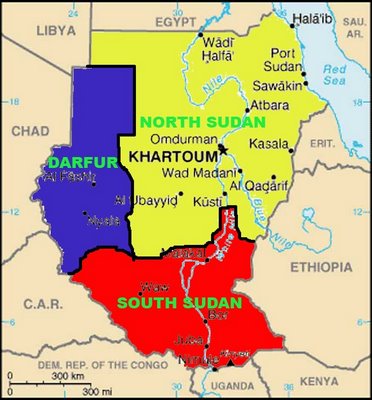
Although Islamic law has not yet been fully implemented, the government and society try to squeeze Christians in all spheres of life and the level of violence has escalated. Christians face growing threats from Muslim communities and Islamist government officials, yet the number of believers is rising. The independence of South Sudan means future instability for Sudan, with a huge loss of revenue. Christians are afraid the religious and ethnic cleansing will continue, particularly along the border with South Sudan.
Please Pray:
Praise the Lord that the number of Muslim-background believers in Sudan is rising
For Christians in the disputed border regions, where churches and schools have been attacked
Give thanks that Open Doors has been able to offer humanitarian assistance as well as discipleship and outreach training.
A leader in Southern Kordofan, Sudan, recently said to a Christian brother, “Your prayers are important, especially during these days… We have nothing to offer you, but I know God in heaven will reward you.”
Persecution dynamics:
Both the government and society try to squeeze Christians in all spheres of life and the level of violence has escalated in the past year. President Al-Bashir is losing support and his regime is in trouble. It has lost 75 per cent of its revenue with the independence of South Sudan, and of its remaining revenue, the press estimates 70 per cent goes to fighting in Darfur and disputed border regions with South Sudan.
Sudan’s Christian Exodus
During the May 2011 invasion by Sudanese Armed Forces (SAF), more than 75,000 people were violently displaced from Abyei region. Homes, schools and churches were burned and looted and water supplies sabotaged. Since April 2012 it is reported that more than 10,000 displaced Dinka Ngok people have returned to the region. The church believes that their presence is essential in Abyei politically, but even more so spiritually, as a testimony to largely unreached tribes in that region.
The future for the church in Sudan is uncertain. The level of fear among Christians is growing slowly and there is reason to fear that Sudan’s leaders – be it al-Bashir or new Islamist leaders – will just continue the religious and ethnic cleansing, particularly in the border areas with South Sudan.
____________________________________
…[O]n 4 October, Sudanese Vice President Ali Uthman Taha declared, “The jihad is our way and we will not abandon it and will keep its banner high.
Between 23–26 October, Sudanese government troops attacked villages near the southern town of Aweil, killing 93 men and enslaving 85 women and children. Then, on 2 November, the Sudanese military attacked villages near the town of Nyamlell, carrying off another 113 women and children. A Kenyan aide worker was also abducted, and has not been seen since.
What’s Sudanese slavery like? One 11-year-old Christian boy told me about his first days in captivity: “I was told to be a Muslim several times, and I refused, which is why they cut off my finger.” Twelve-year-old Alokor Ngor Deng was taken as a slave in 1993. She has not seen her mother since the slave raiders sold the two to different masters. Thirteen-year-old Akon was seized by Sudanese military while in her village five years ago. She was gang-raped by six government soldiers, and witnessed seven executions before being sold to a Sudanese Arab.
Many freed slaves bore signs of beatings, burnings and other tortures. More than three-quarters of formerly enslaved women and girls reported rapes.
[E]stimates of the number of blacks now enslaved in Sudan vary from tens of thousands to hundreds of thousands (not counting those sold as forced labor in Libya)….







 The Peanut Gallery