The pounding on the door was followed by the sound of men yelling for Habila to come out with his family.
Habila rushed to get dressed. When he entered the front room with his wife, Vivian, and their young son close behind, he faced intruders wearing robes and masks. One was armed with an AK-47. Habila said a short prayer to the Lord.
After announcing that they were there to do the work of Allah, the men began to question Habila. They asked him his name, his profession, whether he was a policeman or in the military, and whether he was a Christian or Muslim.
“I am a Christian,” he replied.
Vivian was terrified, knowing the men were members of Boko Haram.
The intruders told Habila that they were giving him the opportunity to live—and live a better life—if he would only become a Muslim and say the shahada [Islamic profession of faith that includes, “There is no god but Allah, and Muhammad is his messenger”]. They even asked him to join them as a member of Boko Haram.
All the while, Habila was prepared to die. “I am a Christian and will always remain a Christian,” he replied, “even to death.”
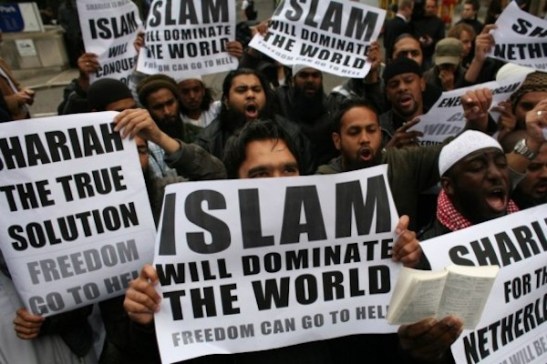
With this weekend’s massacre by Muslim terrorists at a mall in Nairobi, Kenya, and Muslim terrorists killing about 80 Christians at a Christian church in Pakistan, most people wonder what, if anything in addition to a continuing war on terror, can be done to minimize the scourge of Islamic terror.
The answer lies with Muslims themselves. Specifically, it means that Muslim religious leaders around the world must announce that any Muslim who deliberately targets non-combatants for death goes to hell.
I arrive at this answer based on something that I have long believed about Pope Pius XII and the Holocaust.
I readily acknowledge that the situations are not the same. The Jews of Europe were not annihilated by Catholics in the name of Catholicism; whereas the Christians, Muslims and Jews who are massacred by Islamic terrorists are murdered by Muslims in the name of Islam.
I also readily acknowledge that many of the attacks on Pope Pius XII for his alleged inaction and even collaboration with the Nazis during the Holocaust are animated by individuals who hate Western religion generally or hate the Catholic Church specifically. Pius XII was not “Hitler’s Pope,” as one best-selling book on Pius XII is titled.
Moreover, Pius XII lived in Italy during World War II, in a fascist dictatorship that began as Hitler’s ally and ended up being the target of Nazi atrocities. This was not the case with President Franklin D. Roosevelt, for example, who lived in the safety of a free country six-thousand miles away from Germany, did nothing to save the Jews of Europe, and even sent a boatload of Jewish refugees from Hitler back to Europe. Yet the critics of Pius are silent about Roosevelt.
Nevertheless, Pius could have done more to at least slow down the Holocaust. And I say this recognizing that Italy’s Catholic clergy saved many Jews, and that Pius, to his credit, had to be aware of this. What he could have and should have done was to announce that any Catholic — and any Christian for that matter — who in any way helps in the murder of innocent Jews is committing a mortal sin and will not attain salvation. In other words, he or she will go to hell.
This would have had no impact on the many Germans and other Europeans who had no belief in God or religion; but it would have had an impact on many who did.
I believe the same thing regarding Muslim terror. Muslim leaders — specifically, every imam in the world who is not a supporter of terror, the leaders of the most important Sunni institutions, such as the Al-Azhar Mosque and University in Cairo, and religious leaders in Saudi Arabia and the in Gulf states — must announce that any Muslim who participates in any deliberate attack on civilians goes to hell.
This must be announced as clearly and as repeatedly as, for example, Muslim condemnations of Israel.
Just as the promise of immediate entrance into paradise animates many Muslim terrorists, the promise of immediate hell would dissuade many Muslims from committing acts of terrorism. Just as the promise of 72 virgins animates many Muslim terrorists, the promise of hell would dissuade many Muslims from terrorism.
Whenever non-Muslims ask Muslim organizations about Muslim terrorism, these organizations trot out the various anti-terrorism statements they have issued. But these are largely useless because: a) they are usually issued by Western Muslim organizations; b) even when they are issued by Middle Eastern Muslims, they almost always include condemnation of “state terrorism,” which is Muslim-speak for condemnation of any use of force by Israel; and c) these statements usually also condemn non-Muslim terror, as if Christian or Jewish or Buddhist terrorism is as great a threat to humanity as is Muslim terrorism.
Therefore the statements that need to be made by every Muslim teacher, school, mosque and organization that does not support Muslim terror must be unequivocal. They need to state that any Muslim who targets any civilian for death — whether that civilian is Muslim, Christian, Jewish, Hindu or of no religion — goes to hell.
In addition, there need to be large Muslim demonstrations against Muslim terrorism. I understand that Muslim clerics who would organize such demonstrations in the Muslim world might be risking their lives. But what about Muslims in America and Europe?
There have been huge Muslim demonstrations against cartoons depicting Muhammad and any other perceived “insult” against Islam. But I am unaware of a single demonstration of Muslims against Muslim terror directed at non-Muslims.
And if morality doesn’t persuade Muslim leaders to issue such a statement and organize such demonstrations, perhaps self-interest will. To just about everyone in the world outside of academia and the media, Islam is not looking good. Muslim leaders should be aware that with Muslims burning Christian churches and Christian bodies in Pakistan, Iraq, Nigeria, Egypt and elsewhere, and the regular massacring of innocents by Muslim terror groups, the protestations by Muslim spokesmen that “Islam is religion of peace” are beginning to wear thin. For a religion that seeks converts, this is not a positive development.
On the other hand, perhaps not that many Muslim religious leaders do believe that Muslim terrorists are going to hell.
Dennis Prager’s latest book, “Still the Best Hope: Why the World Needs American Values to Triumph,” was published April 24 by HarperCollins.
Population: 1.2 billion (71 million Christians) Main Religion: Hinduism Government: Federal republic Source of Persecution: Religious militancy/Islamic extremism/ Organised corruption
Religious militants are one of the most prominent attackers of the Christian minority, claiming that every Indian has to be Hindu. ‘Anti-conversion laws’ have been adopted in several states and are frequently used as a pretext to disrupt church services and to harass and accuse Christians. Permission to build or renovate a church building is almost impossible and church activities can be perceived as ‘hurting religious feelings’ and ‘disturbing peace and order’. The caste system, which is deeply rooted in society, makes outreach extremely difficult.
For converts from Hindu or Muslim backgrounds, who face exclusion by friends and family
Praise God that, despite the troubles, the Indian church is growing.
PERSECUTION DYNAMICS:
Religious militants who follow the Hindutva ideology believe that every Indian must be Hindu, and are one of the main sources of persecution. The Christian minority therefore never relies on fair treatment and is discouraged from claiming their rights. The successful political party relying on this is Bharatiya Janata Party (BJP). ‘Anti-conversion laws’ have been adopted in several federal states and are frequently used as a pretext to disturb and disrupt church services as well as to harass and accuse Christians. Permission to build or renovate a church building is almost impossible and all church activities can be perceived as ‘hurting religious feelings’ and ‘disturbing peace and order’.
A Maoist-Communist movement called the ‘Naxalites‘, which fights the government, can be found in at least 12 states. They perceive Christians as enemies who have links with the government and the West. Islamic extremism also continues to grow and converts from a Muslim background have to withstand exclusion by their family, friends and neighbours, which can be also true for Hindu converts. The Hindutva movement is also targeting tribes aggressively and corruption is rife in the country. The caste system, which is deeply rooted in society, makes outreach extremely difficult. Despite all these troubles, the Indian church is growing. It is very likely that persecution will increase in 2013 and in the run up to 2014 elections.
ANECDOTAL REPORT:
On March 12 in a southeast India village, the local newspaper published allegations that the Divya Jyoti Church had been built on government land.
Members of Divya Jyoti Church were too late to stop a mob from knocking down their building.
The next day, a crowd equipped with a backhoe demolished the small church building, encountering no resistance from the leaders of Guriya Village, in Chhattisgarh state.
Pastor Budhram Baghel said the church building had stood on land belonging to him.
“A temporary shed had been constructed in 2006 on this land, after gaining permission from the authorities and the shed was later replaced by a permanent building,” said Rev. Rakesh Dass, a friend of Bahel’s.
Three residents of Gadia village, filed a complaint that the building encroached on government land. Their allegations were published in the local newspaper, Dass said.
The crowd arrived the next day, led by Kailash Rathi and Yogendra Kaushik, officers of the local Visva Hindu Parisad, or VHP, a Hindu nationalist organization.
Budhram tried to summon help, but it did not arrive quickly enough to prevent the demolition.
Those who protested were assaulted by members of the crowd, Christian witnesses said. They said several local officials, including the revenue officer, land officer, village head, police chief and a group of police officers, watched the demolition without objection.
Islam is a fast-growing religion, especially in the Western world. Christians increasingly need to be aware of Islam and, most importantly, how to engage its adherents with the gospel of Jesus Christ. Here are 10 things I learned about Islam during my 20 years as a missionary in a Muslim-majority country.
1. “Muslim” and “Arab” are not the same thing.
“Muslim” is a religious term. A Muslim is someone who adheres to the religion of Islam. “Arab,” on the contrary, is an ethno-linguistic term. An Arab is a member of the people group who speak the Arabic language. It is true that Islam originated among the Arabs, and the Qur’an was written in Arabic. However, some Arabs have historically been part of the ancient orthodox Christian churches. On the other hand, Islam spread far beyond the Arab world, and today most Muslims are not Arabs. This includes the Turks, the Kurds, the Iranians, the Pakistanis, other South Asian Muslims, the Malaysians and the Indonesians, almost all of whom are Muslim but none of whom is Arab.
2. The word “Islam” means submission.
A Muslim is someone who submits to God. The Islamic conception of who God is, and how he is to be worshiped and served, is based on the teaching of Muhammad. Thus the Islamic creed is: “There is no God but God, and Muhammad is his prophet.”
3. There are two major denominations of Muslims.
The two major denominations of Muslims are Sunni and Shi’a. Sunnis are the vast majority, at 85 percent of all Muslims. The split occurred in the first generation after Muhammad’s death and was based on a dispute over who should succeed him as leader of the Islamic community.
4. Islamic theology could be summarized as belief in one God, his prophets, his books, his angels, his decrees, and the final judgment.
Islam teaches that humans are born spiritually neutral, perfectly capable of obeying God’s requirements completely, and that they remain this way even after they’ve personally sinned. The need of humanity, therefore, is not salvation but instruction; hence Islam has prophets, but no savior.
5. Islam teaches that Jesus was a great prophet.
Islam affirms that Jesus was born of a virgin, that he lived a sinless life, that he performed mighty miracles, and that he will come again at the end of history. It even calls him a word from God. However, it explicitly denies the deity of Christ and repudiates the title “Son of God” as blasphemous. It also (according to the majority view) denies he died on the cross, claiming that Jesus’ visage was imposed on someone else, who was then crucified, and that Jesus was taken up into heaven without tasting death. Islam explicitly denies the possibility of substitutionary atonement.
Kaaba Shrine in Mecca, Saudi Arabia
6. Islamic practice can be summarized by the Five Pillars of Islam.
These are composed of the confession of faith (“There is no God but God, and Muhammad is his prophet”), prayer (the ritual prayers said in Arabic five times a day while facing Mecca and performing the prescribed set of bowings, kneeling, and prostrations), alms (taken as a tax in some officially Islamic countries), fasting (the lunar month of Ramadan, during which Muslim believers fast during daylight hours but can eat while it’s dark), and pilgrimage (the Hajj, or pilgrimage to Mecca, which every Muslim believer should make once in his or her lifetime).
7. The vast majority of Muslims are not terrorists.
In fact, normal Islamic religious law forbids the intentional killing of non-combatants in battle. It also forbids suicide. It’s a small minority view that allows these things, and it’s a small minority who engage in terrorist activities.
8. Muslims can be some of the friendliest, most hospitable people on earth.
They make great neighbors and great friends. No Christian should be afraid to build a relationship with a Muslim.
9. Muslims need salvation through Jesus Christ.
They are lost exactly like any other non-Christian—neither more nor less than anyone else. Furthermore, Muslims do come to faith in Jesus Christ. It usually takes time, and extended exposure to the Word of God and the lives of Christians, but more Muslims are coming to faith today than at any other point in history.
10. God loves Muslims, and so should we—even those few who are our enemies.
We should love them enough to befriend them, love them enough to make them welcome in our homes, and love them enough to share the gospel with them.
Sarah Lynch, Special for USA TODAY / June 23, 2013
CAIRO – Women here say it crosses class barriers, generations and faiths. It prevails in public buses, trains, streets and homes. It exists online, on university campuses, and in parks, markets, at work and in cafes.
(Photo: Khalil Hamra, AP)
STORY HIGHLIGHTS
+ Men pay few penalties for grabbing and groping women in a violent manner
+ 99.3% of Egyptian women surveyed reported experiencing some form of sexual harassment
+ Islamists have blamed victims for their harassment
Sexual harassment of women is epidemic in Egypt, where men pay few penalties for grabbing and groping women in a violent manner.
In the film, Cairio 678, one of the lead characters, played by actress Bushra, is repeatedly harassed on bus
The harassment appears to permeate the nation’s every pore, academics say. After decades of such behavior, a growing number of groups and initiatives are working to do something about it.
“For many women who have to rely on walking, public transportation or the metro, it’s a grinding thing that happens every day,” said Helen Rizzo, associate professor of sociology at the American University in Cairo.
“For some women, it’s been very serious: grabbing, touching, trying to pull women into cars, and the whole phenomena of attacking protests,” she said.
A recent report by U.N. Women said 99.3% of Egyptian women surveyed in a recent study reported experiencing some form of sexual harassment — everything from inappropriate sexual jokes, to whistling, touching, groping and rape.
“Through this study we are able to confirm the spread of sexual harassment in Egypt to unprecedented levels,” stated the U.N. report.
Some believe the problem has grown worse since the 2011 revolution that ousted dictator Hosni Mubarak and led to a government under Muslim Brotherhood rule, perhaps due to a drop in effective security.
“Certainly sexual harassment and sexual assault and violent attacks are something not new in Egypt,” said Diana Eltahawy, Amnesty International’s Egypt researcher, noting that under Mubarak they were used as tools to repress women.
The survey is striking for the sheer range of places where women feel they can be victimized.
Almost 83% of surveyed women said they don’t feel safe in the street and 79% don’t feel safe in a taxi. Sixty-seven percent said girls are subject to harassment regardless of what they wear, how they look, their manner of speech or their gait. Female workers and students are most exposed to harassment.
Brutality in the public space now has symbolic value for the nation too, Eltahawy said. Vicious mob attacks and assault happen often in Tahrir Square, the heart of that nation’s uprising where men and women joined and camped out for days to demand democratic freedoms and a fair justice system.
An organization called HarassMap founded in 2010, allows women to report locations of abuse using technology. Through advertising on television, radio, in music and print the group seeks to change perceptions associated with harassment and remind the public it is a punishable offense.
While the law doesn’t explicitly criminalize sexual harassment, three laws that address rape, public indecency and assault can be applied to harassment cases.
“It’s all about culture and misconceptions,” said Dina Samir, communications manager at HarassMap, who says harassment has worsened over the last decade. “If the culture changes it would put pressure on the government to enforce laws.”
“We believe we can play a big role in changing perceptions,” she said.
Men are also getting involved because “it’s not just a women’s issue,” said Ayman Nagy, who founded the Anti-Harassment Movement. “It’s a humanity issue.”
Nagy and a group of 73 full-time volunteers hold workshops in universities and even in the streets among other places to talk about issues that include sexual abuse.
“We need to solve the problem from its roots,” Nagy said. “We’re going to work on the harasser himself, because we think he is a sick person and needs help, and that we can help him.”
Other groups such as Operation Anti-Sexual Harassment seek to end mob harassment and assault, and Tahrir Bodyguard has a team of volunteers in bright green vests who intervene when they see sexual violence taking place during protests.
In March, President Mohammed Morsi launched an effort to help identify challenges facing women through workshops, fieldwork and discussions. Last month, local press reported that the government created an all-female unit of police to battle sexual harassment.
“Time will tell whether or not these are serious attempts, and also whether or not they are going to bring about real changes and results the way grass-roots movements have been able to do,” said Soraya Bahgat, who founded Tahrir Bodyguard and is now working more generally on women’s issues.
Not all groups, however, are on board with efforts to empower women and Islamists have blamed victims for their harassment.
Earlier this year the powerful Muslim Brotherhood condemned a United Nations report meant to reduce violence against women. The Brotherhood criticized articles in the document that gave judges, rather than husbands, authority in cases of divorce and granted women full rights to file legal complaints against their husbands for rape or sexual harassment.
“The document includes articles that contradict established principles of Islam, undermine Islamic ethics and destroy the family,” the Muslim Brotherhood said in a statement.
Despite challenges, activists persist, although their efforts have not led to a measurable drop in harassment.
“We cannot say it has decreased because of our work but the positive side is that it has become less of a taboo and so many activists and initiatives are working on the topic,” HarassMap’s Samir said. “These are the only glimmers of hope.”




 The Peanut Gallery