When Saul arrived in Jerusalem, he tried to meet with the believers, but they were all afraid of him. They did not believe he had truly become a believer!
Then Barnabas brought him to the apostles and told them how Saul had seen the Lord on the way to Damascus and how the Lord had spoken to Saul. He also told them that Saul had preached boldly in the name of Jesus in Damascus.
So Saul stayed with the apostles and went all around Jerusalem with them, preaching boldly in the name of the Lord. He debated with some Greek-speaking Jews, but they tried to murder him.
When the believers heard about this, they took him down to Caesarea and sent him away to Tarsus, his hometown.
The church then had peace throughout Judea, Galilee, and Samaria, and it became stronger as the believers lived in the fear of the Lord. And with the encouragement of the Holy Spirit, it also grew in numbers.
Prayer:Holy Spirit – Encourage believers in Jesus Christ all around the world. Heavenly Father – Drive out our fears with an overwhelming sense of your perfect love for us. Lord Jesus – Give us your heart… a heart of service and sacrifice. In all things, may we honor you. Amen.
Spiritual Song:“This Is Our God” – Hillsong
_______________________
As Egyptians of all factions prepare to demonstrate in mass against the Muslim Brotherhood and President Morsi’s rule on June 30, the latter has been trying to reduce their numbers, which some predict will be in the millions and eclipse the Tahrir protests that earlier ousted Mubarak.
Egypt's Coptic Pope Tawadros II
Among other influential Egyptians, Morsi recently called on Coptic Christian Pope Tawadros II to urge his flock, Egypt’s millions of Christians, not to join the June 30 protests.
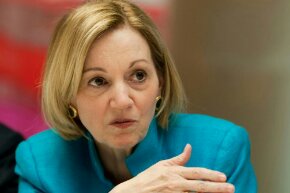
While that may be expected, more troubling is that the U.S. ambassador to Egypt is also trying to prevent Egyptians from protesting—including the Copts. The June 18th edition of Sadi al-Balad reports that lawyer Ramses Naggar, the Coptic Church’s legal counsel, said that during Patterson’s June 17 meeting with Pope Tawadros, she “asked him to urge the Copts not to participate” in the demonstrations against Morsi and the Brotherhood.
The Pope politely informed her that his spiritual authority over the Copts does not extend to political matters.
US Ambassador Anne Patterson
Regardless, many Egyptian activists are condemning Patterson for flagrantly behaving like the Muslim Brotherhood’s stooge. Leading opposition activist Shady el-Ghazali Harb said Patterson showed “blatant bias” in favor of Morsi and the Brotherhood, adding that her remarks had earned the U.S. administration “the enmity of the Egyptian people.” Coptic activists like George Ishaq openly told Patterson to “shut up and mind your own business.” And Christian business tycoon Naguib Sawiris—no stranger to Islamist hostility—posted a message on his Twitter account addressed to the ambassador saying “Bless us with your silence.”
Indeed, the U.S. ambassador’s position as the Brotherhood’s lackey is disturbing—and revealing—on several levels. First, all throughout the Middle East, the U.S. has been supporting anyone and everyone opposing their leaders—in Libya against Gaddafi, in Egypt itself against 30-year U.S. ally Mubarak, and now in Syria against Assad. In all these cases, the U.S. has presented its support in the name of the human rights and freedoms of the people against dictatorial leaders.
So why is the Obama administration now asking Christians not to oppose their rulers—in this case, Islamists—who have daily proven themselves corrupt and worse, to the point that millions of Egyptians, most of them Muslims, are trying to oust them?
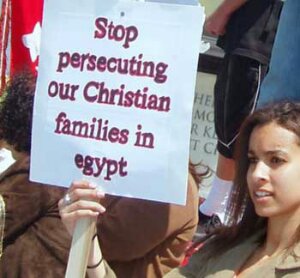
Egyptian Christians face increasing persecution from the Islamists in control of the state.
What’s worse is that the human rights abuses Egypt’s Coptic Christians have been suffering under Muslim Brotherhood rule are significantly worse than the human rights abuses that the average Egyptian suffered under Mubarak—making the Copts’ right to protest even more legitimate, and, if anything, more worthy of U.S support.
Among other things, under Morsi’s rule, the persecution of Copts has practically been legalized, as unprecedented numbers of Christians—men, women, and children—have been arrested, often receiving more than double the maximum prison sentence, under the accusation that they “blasphemed” Islam and/or its prophet.
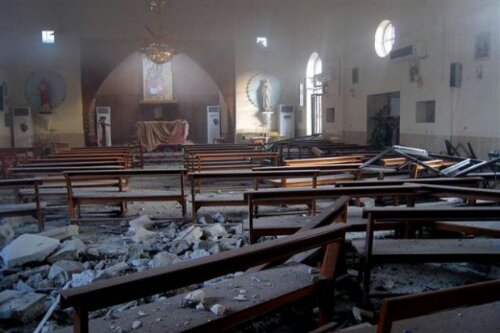
It was also under Morsi’s reign that another unprecedented scandal occurred: the St. Mark Cathedral—holiest site of Coptic Christianity and headquarters to the Pope Tawadros himself—was besieged in broad daylight by Islamic rioters. When security came, they too joined in the attack on the cathedral. And the targeting of Christian children—for abduction, ransom, rape, and/or forced conversion—has also reached unprecedented levels under Morsi.
Yet despite the fact that if anyone in Egypt has a legitimate human rights concern against the current Egyptian government, it most certainly is the Christian Copts, here is the U.S., in the person of Ms. Patterson, asking them not to join the planned protests.
In other words, and consistent with Obama administration’s doctrine, when Islamists—including rapists and cannibals—wage jihad on secular leaders, the U.S. supports them; when Christians protest Islamist rulers who are making their lives a living hell, the administration asks them to “know their place” and behave like dhimmis, Islam’s appellation for non-Muslim “infidels” who must live as third class “citizens” and never complain about their inferior status.


 The Peanut Gallery