“Dhimmitude” – a word you should understand

Peanut Gallery: As events unfold in the Middle East, “dhimmitude” is a word you should understand- it directly affects Christians living in Islamic countries and explains why they are so often mistreated (see earlier post “Muslim Persecution of Christians”). islam for dhimmis

“dhimmitude […] represents a behavior dictated by fear (terrorism), pacifism when aggressed, rather than resistance, servility because of cowardice and vulnerability. […] By their peaceful surrender to the Islamic army, they obtained the security for their life, belongings and religion, but they had to accept a condition of inferiority, spoliation (plundering) and humiliation. As they were forbidden to possess weapons and give testimony against a Muslim, they were put in a position of vulnerability and humility.”[9] (Wikipedia)

To put it simply, non-muslims (dhimmis) living in Islamic countries are second-class citizens with little, or no, protection under Sharia law. They are essentially at the mercy of the enforcing religious authority.

If you read the entire Wikipedia article you will find that my characterization of “dhimmitude” and “dhimmis” is disputed by some scholars as “past history” and could be described as Islamophobic.  But disputed or not, there is growing evidence that Western observers of Islamic countries have turned a blind eye to the current wide-spread reality of “dhimmitude,” particularly in rural, or lawless, areas that are outside normal Western scrutiny. (I refer you again to “Muslim Persecuton of Christians.”)

This current post, however, was prompted by an article by Andrew G. Bostom posted on pjmedia.com, “Muhammad Morsi’s Islamic Jew-Hatred, Bernard Lewis’ Islamic Negationism” – asking the question: “Why do the media’s Middle East pundits ignore the Jew-hatred intrinsic to Islamic doctrine?”

The answer lies in the willful denial of the historic realities (past and present) of “dhimmitude.” Jew-hatred (and Christian persecution) are intrinsic to Muhammad Morsi’s Sharia inspired worldview. But it simply doesn’t fit the Western pundits’ “Arab Spring” narrative.

Continue reading ““Dhimmitude” – a word you should understand”

Morning Reading: Luke 8.16-18 NLT – pay attention

Reading: Luke 8.16-18 NLT

pay attention“No one lights a lamp and then covers it with a bowl or hides it under a bed. A lamp is placed on a stand, where its light can be seen by all who enter the house. For all that is secret will eventually be brought into the open, and everything that is concealed will be brought to light and made known to all.

“So pay attention to how you hear. To those who listen to my teaching, more understanding will be given. But for those who are not listening, even what they think they understand will be taken away from them.”

Payer: Heavenly Father – All creation reveals Your power and nature.  Lord Jesus – You have revealed the person and love of God. Holy Spirit – Help me pay attention to what I see, or hear, or read today – anything that makes me more like you and increases my understanding of what You would have me be, or do. I ask it in Jesus’ name. Amen.

Spiritual Song: “Thy Word” – Avalon (YouTube)

Morning Reading: Luke 8.4-15 NLT – Kingdom secrets

Reading: Luke 8.4-15 NLT

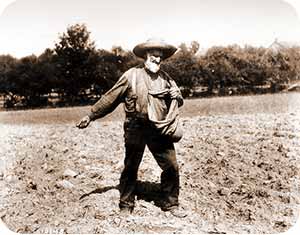
sowing seedsOne day Jesus told a story in the form of a parable to a large crowd that had gathered from many towns to hear him: “A farmer went out to plant his seed. As he scattered it across his field, some seed fell on a footpath, where it was stepped on, and the birds ate it. Other seed fell among rocks. It began to grow, but the plant soon wilted and died for lack of moisture. Other seed fell among thorns that grew up with it and choked out the tender plants. Still other seed fell on fertile soil. This seed grew and produced a crop that was a hundred times as much as had been planted!” When he had said this, he called out, “Anyone with ears to hear should listen and understand.”

His disciples asked him what this parable meant. He replied, “You are permitted to understand the secrets of the Kingdom of God. But I use parables to teach the others so that the Scriptures might be fulfilled:

‘When they look, they won’t really see.
When they hear, they won’t understand.’

“This is the meaning of the parable: The seed is God’s word. The seeds that fell on the footpath represent those who hear the message, only to have the devil come and take it away from their hearts and prevent them from believing and being saved. The seeds on the rocky soil represent those who hear the message and receive it with joy. But since they don’t have deep roots, they believe for a while, then they fall away when they face temptation. The seeds that fell among the thorns represent those who hear the message, but all too quickly the message is crowded out by the cares and riches and pleasures of this life. And so they never grow into maturity. And the seeds that fell on the good soil represent honest, good-hearted people who hear God’s word, cling to it, and patiently produce a huge harvest.”

Prayer: Word of God – Speak to me today… lead me not into temptation and deliver me from evil; refocus my heart and mind on Your Kingdom purposes; take root in me and produce a rich harvest of Life – abundant and eternal. Amen.

Spiritual Song: “Word of God Speak” – Mercy Me (YouTube)

Please Pray for Christians in Iraq – World Watch List #4

Peanut Gallery: Christian Persecution – Iraq – #4 (worldwatchlist.us)

Christians in Iraq are on the verge of extinction. Large numbers have fled abroad or to the (until recently) safer Kurdish region, where they face unemployment and inadequate schooling, medical care and housing. The church faces many challenges – members being killed or abducted, and a lack of capable leaders. In central and southern Iraq, traditional Christians suffer as much as Muslim-background believers, as a result of their visibility. In May 2012, 20 Christian families in Mosul received threats, and the house of another Christian was set on fire.

Prayer Request:

  • For the many Christians displaced from their homes by threats of murder or abduction
  • Ask God to raise up godly, wise leaders to shepherd the church
  • For Open Doors trauma counsellors working with children and families affected by persecution.

Sargon’s Story: Sargon* and his wife Leja* once lived in Baghdad, where Sargon worked as a mechanic. Now, they live in northern Iraq in a small, sparsely furnished apartment.

Iraqi Christians Flee North
While still in Baghdad, the fallout from a bomb claimed three of the lives of Sargon’s fellow mechanics. To this day, though he survived, Sargon carries shrapnel in his shoulder that cannot be removed and continues to cause him pain.

The effects of that day have also resulted in emotional shrapnel in Sargon’s heart, aggravated by increased terrorist attacks in the couple’s neighborhood in Baghdad.

One day Leja found a letter in their mailbox, “You had better get away quickly, or you may die.”

As other Christian in Baghdad had to do, the traumatized couple had to take the letter very seriously. They gathered as much of their possessions together as possible and took off that same night in their old car, heading for northern Iraq.

Sargon found work at a small local garage in their new city. He earned little; hardly enough to pay their rent. So after a while he and his wife began making serious plans to return to Baghdad, despite the dangers.

When Open Doors learned of their situation we provided the couple with a micro loan, which enabled Sargon to start up his own garage.

Although the small micro-loan helped Sargon and Leja make a new start, they still wrestle with serious issues: Tenants moved into their Baghdad home, with the help of the government, and the couple will not be able to get it back without costly legal assistance.

There is no “happy ending” to Sargon and Leja’s story yet, and unfortunately their story is also the story of many Christian refugees in northern Iraq.

*Sargon & Leja – not their real names.

Country Video:

Morning Reading: Luke 8.1-3 NLT – road crew

Reading: Luke 8.1-3 NLT

sisters of charitySoon afterward Jesus began a tour of the nearby towns and villages, preaching and announcing the Good News about the Kingdom of God. He took his twelve disciples with him, along with some women who had been cured of evil spirits and diseases. Among them were Mary Magdalene, from whom he had cast out seven demons;  Joanna, the wife of Chuza, Herod’s business manager; Susanna; and many others who were contributing from their own resources to support Jesus and his disciples.

Prayer: Lord Jesus – Give me a servant’s heart… full of love and gratitude for all You have done for me. Help me to see others as You see them. And give me a willingness to respond to them with the same love and grace that You have shown me. Amen.

Spiritual Song: “Draw Me Close to You” – Hillsong (YouTube)